Common products
- Mifare Classic cards and fobs
- EM4100 cards and fobs
- HID Prox cards and fobs
- NTAG NFC cards and fobs
- UID Changeable cards and fobs
- T5577 Writable cards and fobs
RFID cards, key fobs and wristbands are used in many industries including access control, hotels, gyms, transport and events. The way these products are printed affects their durability, appearance and cost.
Choosing the right print method is just as important as choosing the chip itself. Different printing technologies are suited for different branding goals, durability requirements and production speeds.
Below is a practical guide to the five main printing methods we offer, and when each one makes the most sense.
| Technology | Main Use | Key Advantage / Trade-off |
| Laser Marking | Numbers or words | Permanent and unalterable; limited to monochrome/greyscale |
| Silkscreen | Simple logos / spot colors | Best for specific Pantone color matching on uneven surfaces (fobs) |
| Retransfer | Full color edge-to-edge | Best in-house quality; can print over NFC chips without “halos” |
| Dye Sublimation | Simple graphic cards | Fast and cheap for basic IDs; leaves a tiny white border around the edge |
| UV Offset | Full color edge-to-edge | Lowest unit cost for high volumes; highest print resolution |
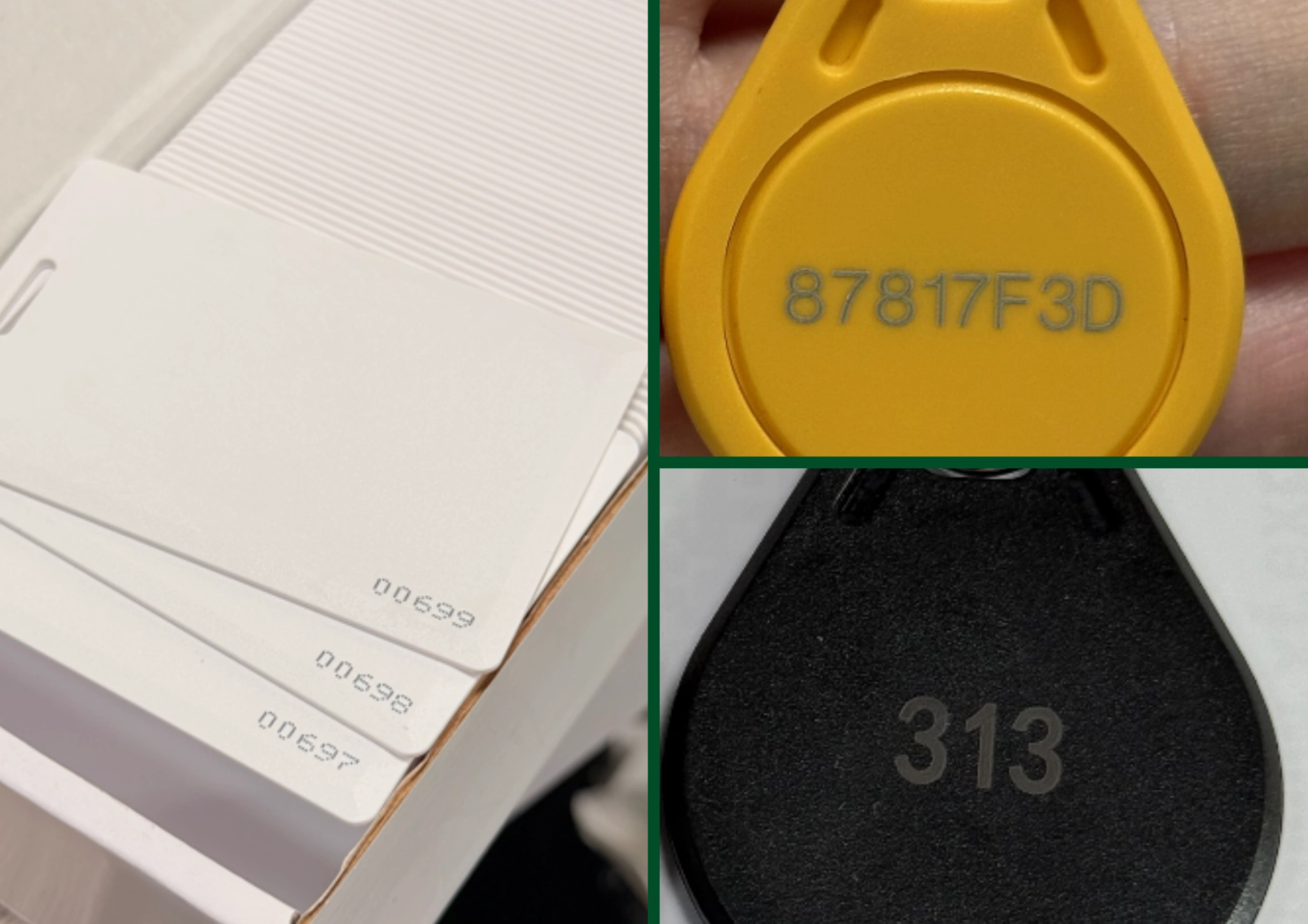
Laser marking is commonly used on RFID cards and key fobs for serial numbers, barcodes and QR codes. A precision laser permanently marks the surface by engraving or darkening the material.
Because the marking becomes part of the plastic, it is extremely durable and resistant to wear.
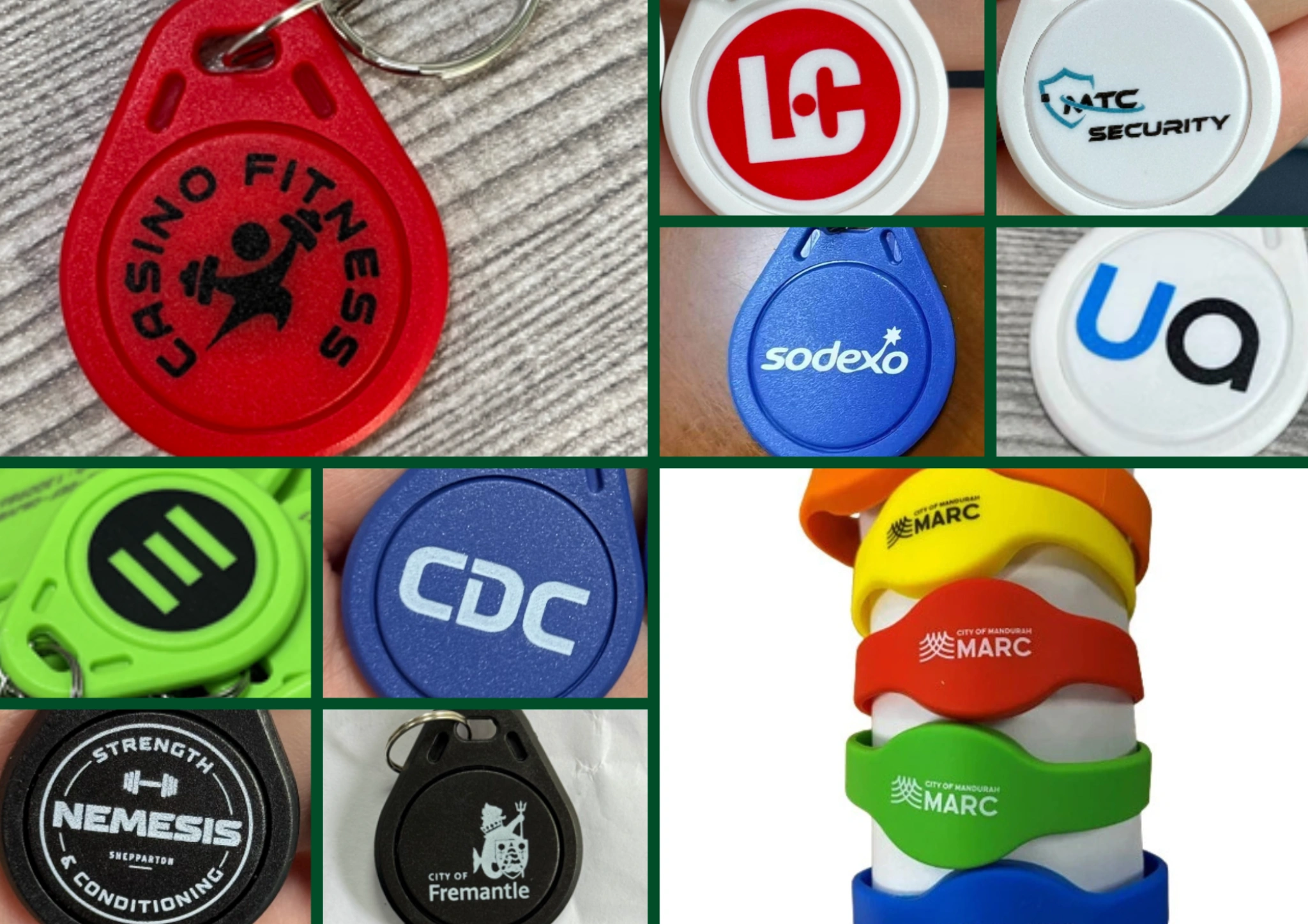
Silkscreen printing applies ink to the surface through a mesh screen stencil. Each colour is applied separately using its own screen, creating solid colours and simple designs.
This method produces strong, opaque colours and durable prints, making it popular for branded RFID fobs and wristbands.
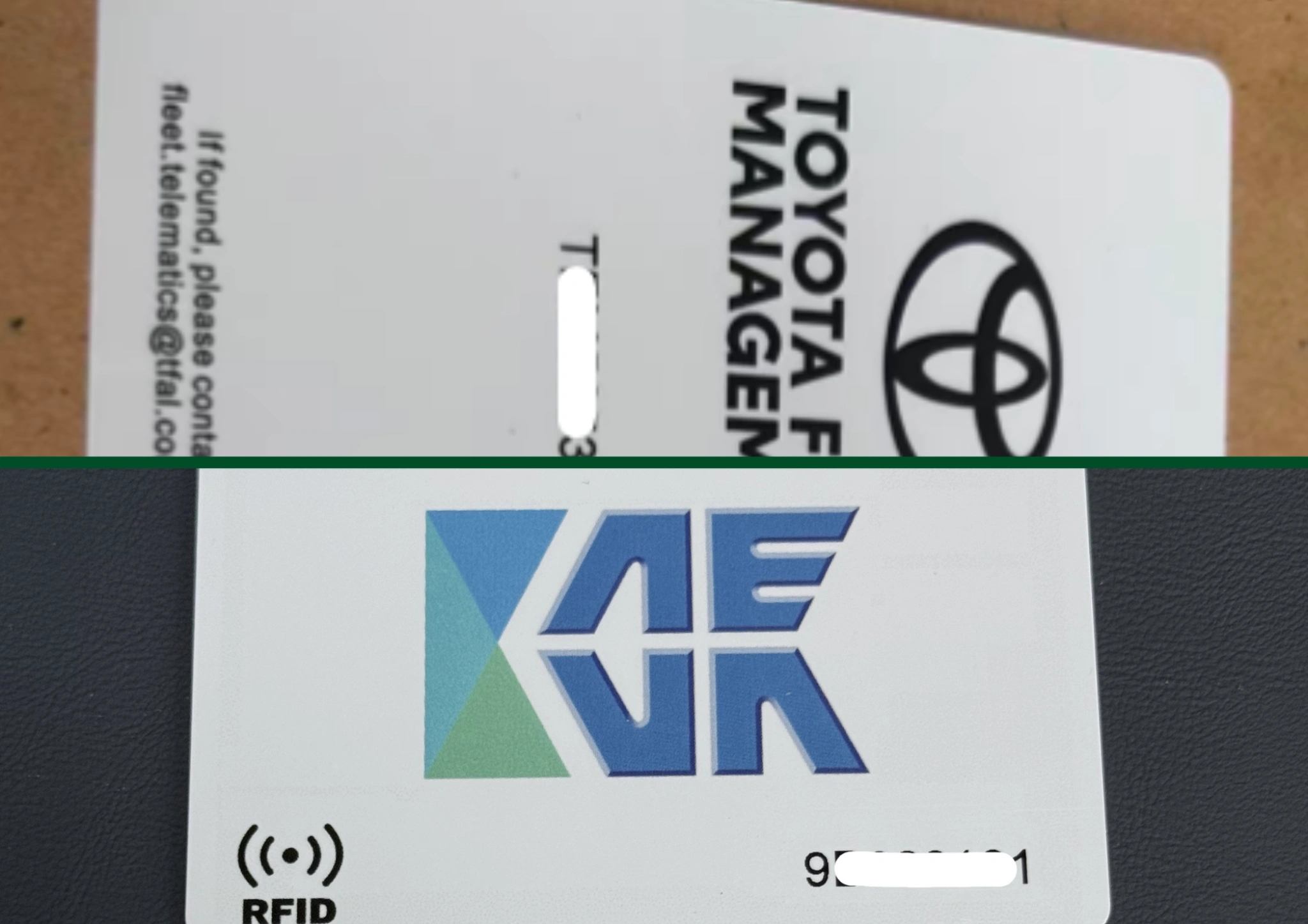
Retransfer is the premium method for RFID cards when you want a professional, edge-to-edge finish similar to a credit card. It works by first printing the image onto a clear transfer film. The printed film is then fused onto the card surface using heat and pressure.
This process allows the image to cover the entire card surface, producing high-quality edge-to-edge printing and excellent image detail.

Dye sublimation printing is commonly used for quick logo and numbering jobs on RFID cards. The printer heats dye into gas, which penetrates the card surface instead of sitting on top.
This is one of the most common methods used in desktop card printers and is ideal for quickly printing personalised cards.
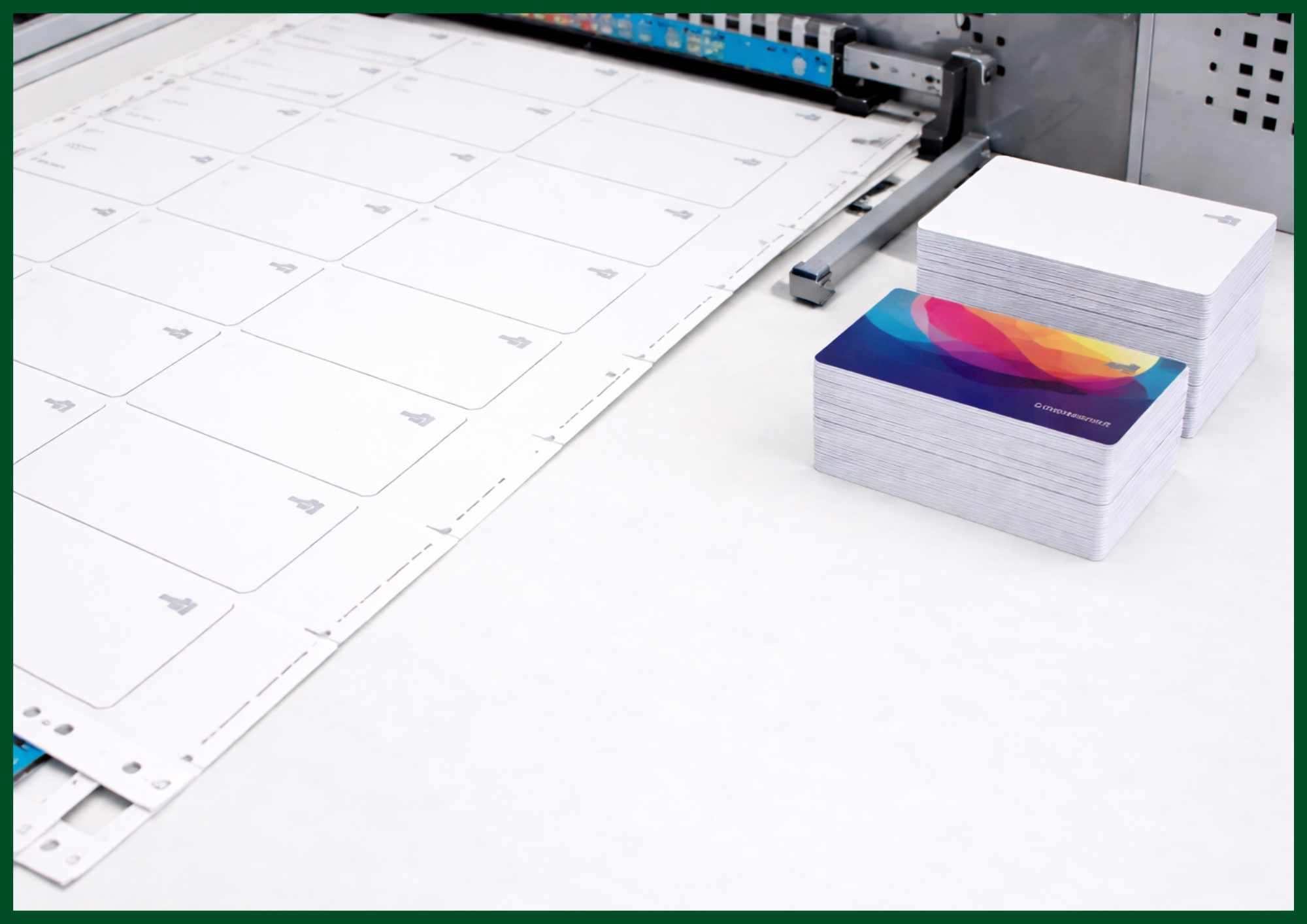
UV offset printing is an industrial card production method used to produce high volumes of RFID cards with extremely high print quality. Instead of printing on individual finished cards, artwork is printed onto large PVC sheets using offset lithography, where ink is transferred from a metal plate to a rubber blanket and then onto the plastic.
UV-curable inks are instantly hardened with ultraviolet light, preventing smudging on the plastic surface and producing vibrant, long-lasting colours. The printed sheets are then laminated with protective layers and die-cut into individual CR80 cards, creating durable cards with true edge-to-edge printing and no white borders. This process is ideal for large production runs where consistent quality and durability are essential.
If you are unsure which option suits your project, our team can recommend the best method based on durability, artwork and budget.
Contact us to discuss your RFID printing requirements.
